
Mechanical Engineer-in-Training (EIT) | Design | Energy | Project Engineering
I’m Evan Soontiens, an APEGA-registered Engineer-in-Training and University of Calgary Mechanical Engineering graduate with 16 months of industry experience across energy, facilities, construction, and field operations.
This portfolio highlights my work in mechanical design, manufacturing, composites, robotics, simulation, and engineering problem solving.

Capstone Project
First Place - Multidisciplinary Category, University of Calgary Engineering Design Capstone Fair
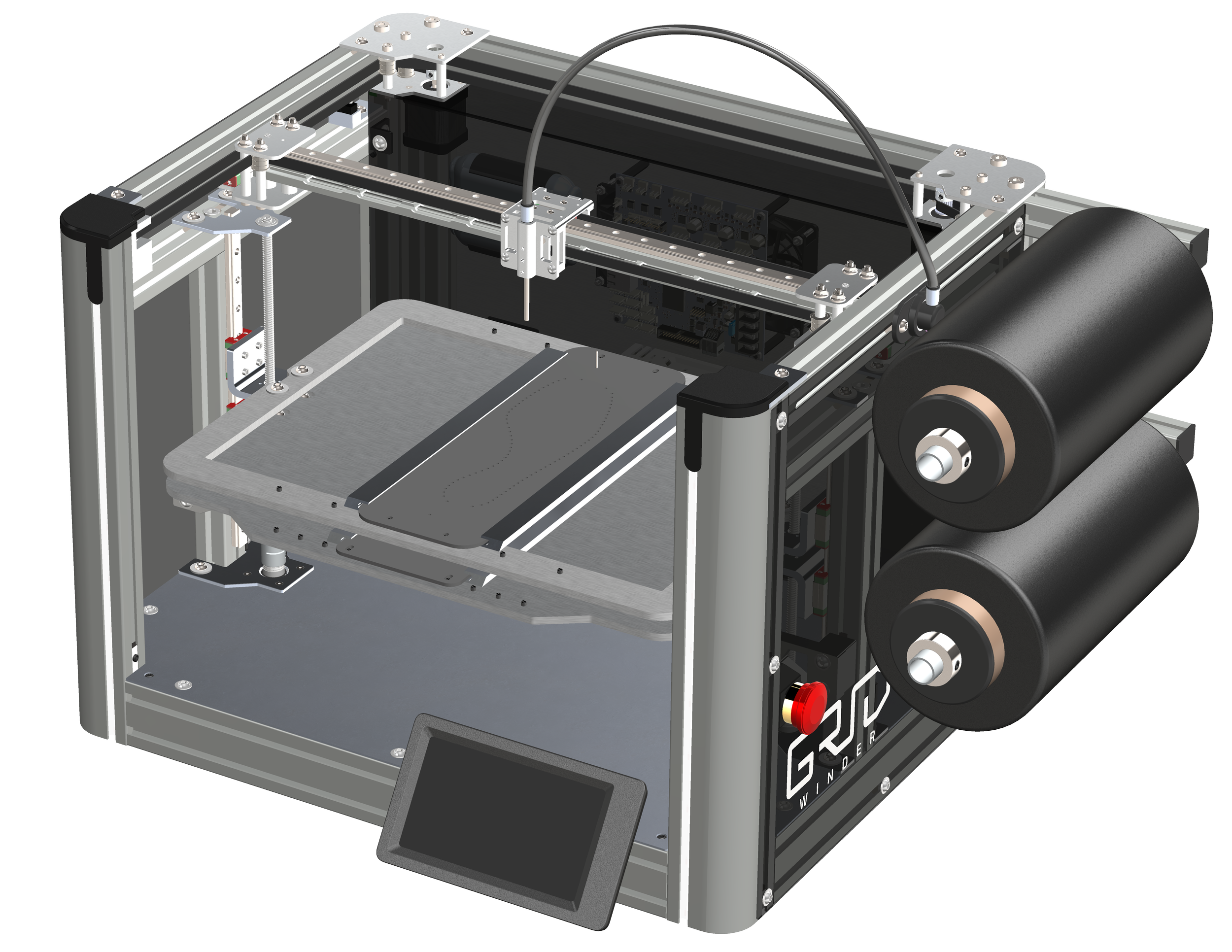
The GridWinder is a product designed to eliminate waste during composite manufacturing. It also provides an option for a higher level of strength customization for engineers working with composite parts. The scalable nature of the technology lowers the barrier of entry for custom-made composite parts for startup or small-scale companies.
Schulich Space Rover Team
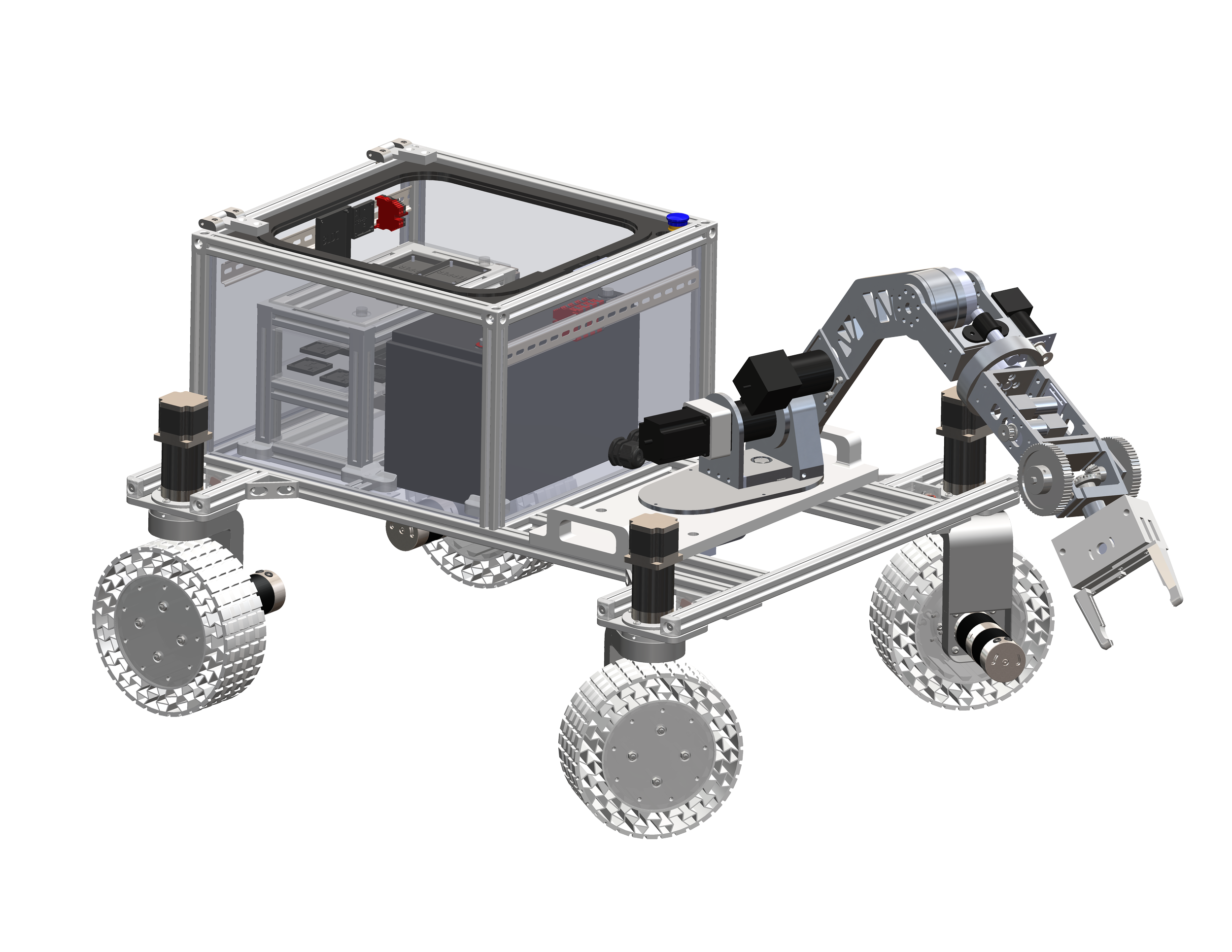
The SSRT is a student-led engineering team that creates a rover which competes in the CIRC (Canadian International Rover Challenge) every summer in Drumheller. This competition tests the abilities of the rover in multiple real-world scenarios that mimic work on other planets, such as soil extraction or exploration, as well as work in dangerous areas on Earth, such as carrying out a human body from a nuclear meltdown zone or turning off a nuclear reactor.
More Projects
Gaming Computer Airflow Optimization
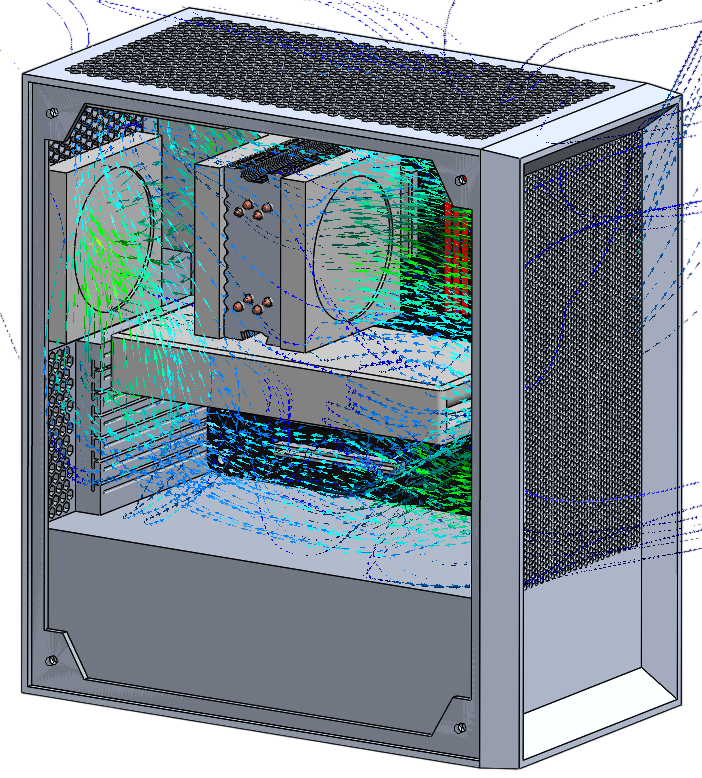
During my final year of school, I was tasked to create a product in SOLIDWORKS that had a heavy emphasis on using simulations to prove its validity. I chose to model my own gaming computer in SOLIDWORKS in detail, and create shrouds that would direct airflow from the front case fans, through the major components, and out the exhaust fans.
This project consisted of two simulations, each being performed on the computer with and without the shrouds installed:
Airflow simulations using all of the fans in the system, this allowed me to measure the average velocities across the CPU and GPU heatsinks. Utilizing Reynolds, Prandtl, and Nusselt number calculations, I was able to convert those velocities into convection coefficients.
These convection coefficients were then directly used in SOLIDWORKS thermal studies to determine the relative decrease in temperature for the CPU and GPU, which was the overall goal of the project.
With the shrouds equipped, a 17% drop in temperature was observed in the CPU, and an 11% decrease was seen in the GPU, proving that if a person were to 3D print shrouds similar to the ones I modeled, they would see a substantial drop in temperatures, leading to increased gaming and workstation performance.
Lighter Study
During my third year of school, I was part of a group of students tasked to either analyze an existing product or create a new product and analyze it. We chose to investigate the mechanics of a traditional BIC lighter.
These studies consisted of two major sections:
Friction study between the flint and sparkwheel. This was first done by performing spring analysis to determine with how much force the flint was passively being pushed up into the sparkwheel with. The acceleration of the sparkwheel during engagement was then measured using slow motion video, and alongside a theoretical value of the coefficient of friction between the two materials, we were able to understand how quickly the flint would theoretically be used up during normal operation.
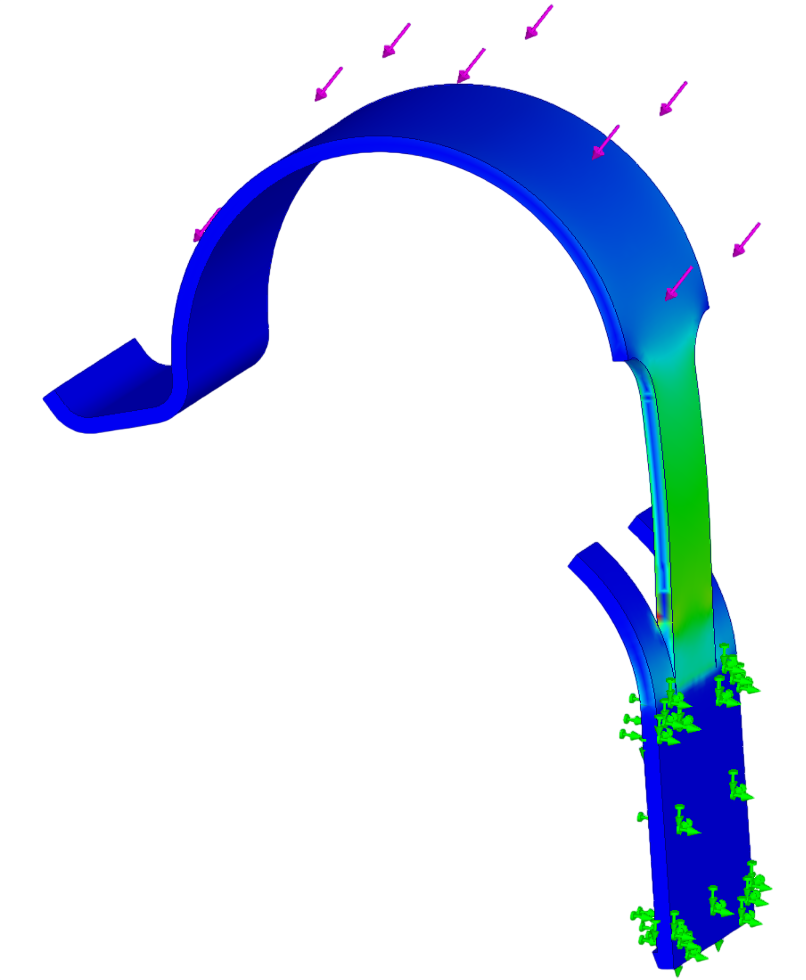
Static analysis of the sparkwheel guard (seen above), and determining how much force was required by the average person to depress the guard enough to engage the sparkwheel.
Locomotive Train
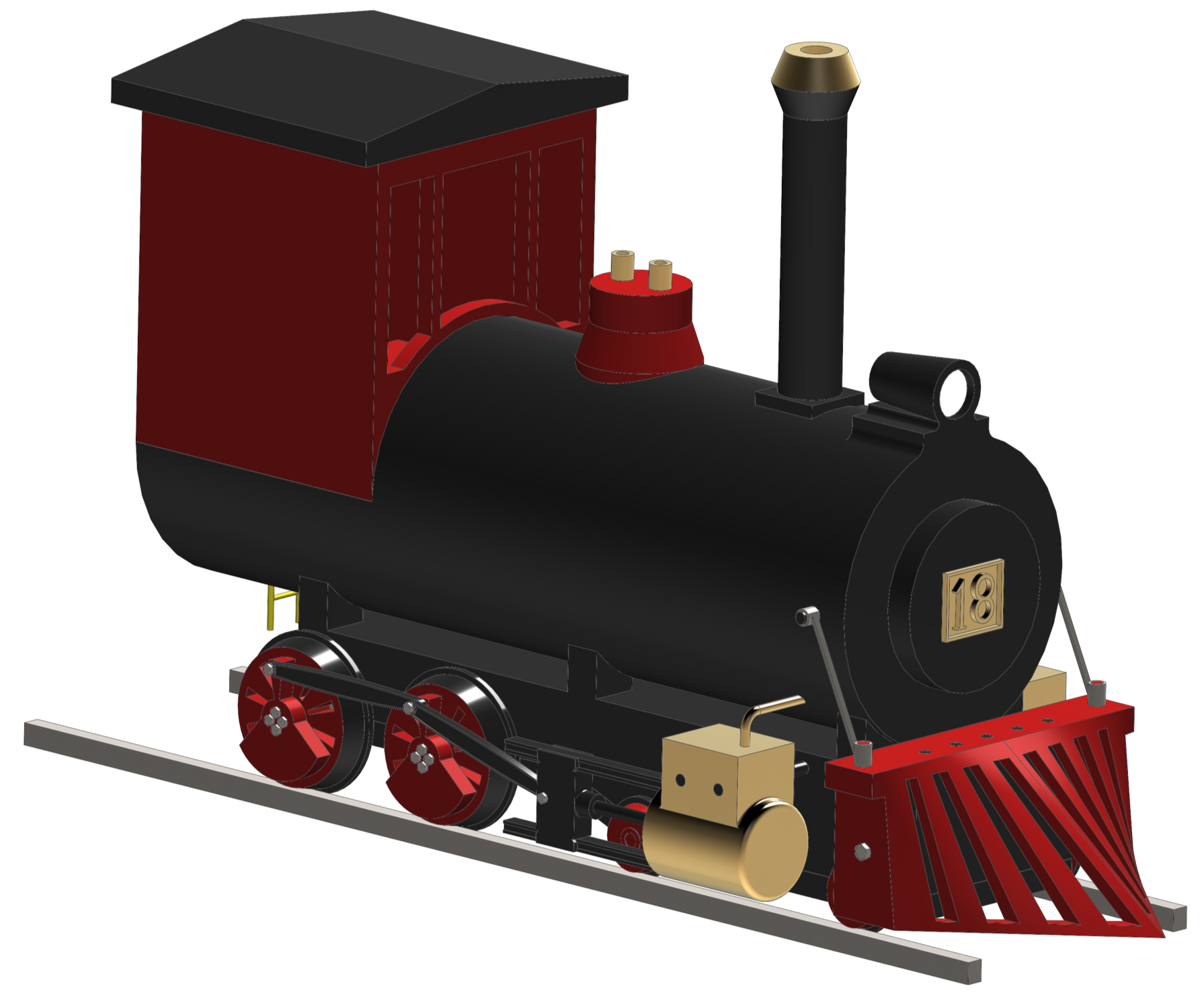
In a CAD class in my second year of school, we were tasked to create a complex assembly of parts using SOLIDWORKS. I decided to completely model a locomotive train. I studied how their motions systems worked, and was able to mate things together in a way to allow for typical motion of the wheels and plungers to be verified.
The following major systems were modeled and assembled into the train seen above:
Main body / coal burning zone with accompanying details on top such as a chimney and light.
Conductor area with ladder.
Cow catcher in the front.
Combustion chambers.
Rail systems driven by plungers inside the combustion chambers, used for turning the wheels.
Large main wheels attached by coupling rods on their respective counterweights.